
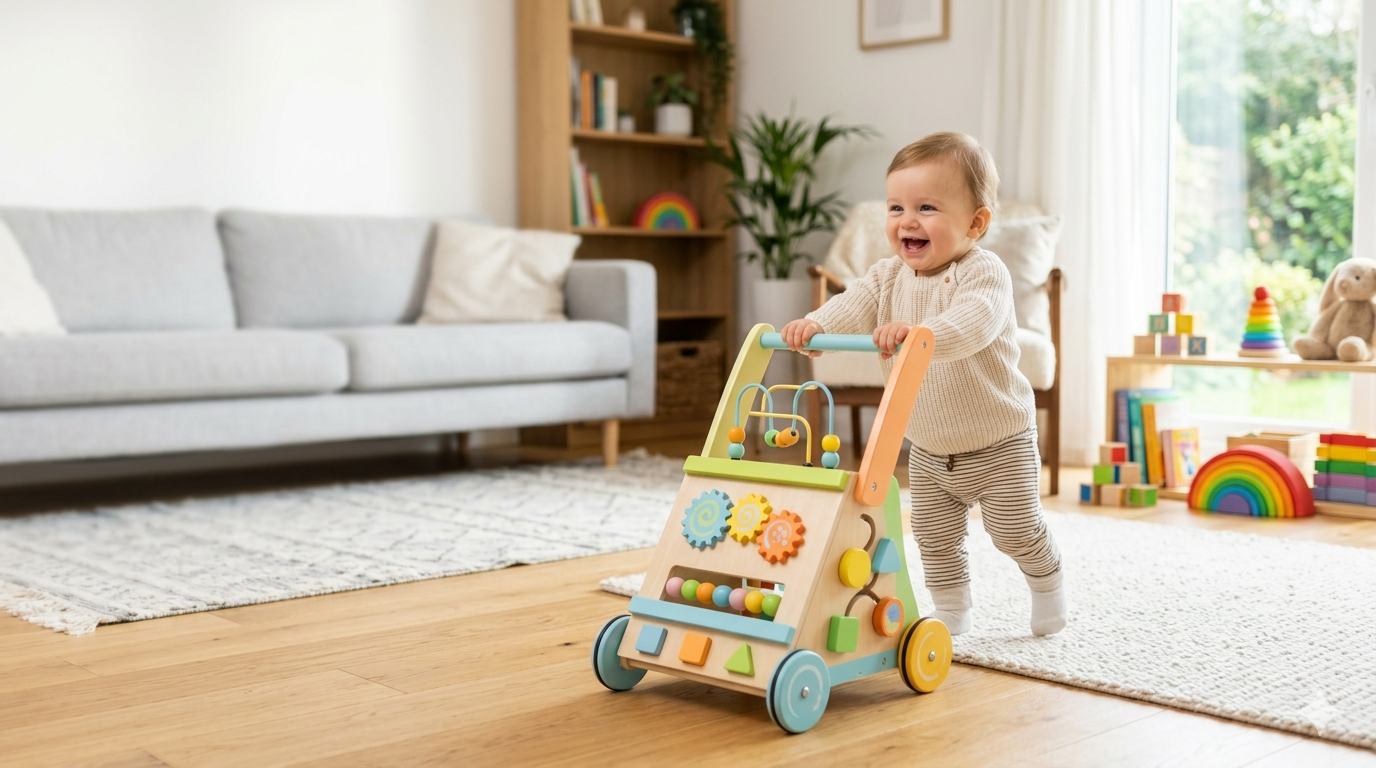
Learning Walker for Baby Toy: The Ultimate Guide for Safe Walking, Smart Learning, and Happy Development
Your baby’s first steps are more than just movement—they’re a milestone filled with excitement, pride, and a little bit of nervousness. As a parent or caregiver, you naturally want to support your baby’s growth in the safest and most effective way possible. That’s where a learning walker for baby toy becomes a valuable tool.
Unlike traditional baby walkers, modern learning walkers are thoughtfully designed to combine mobility, education, and entertainment. They help babies develop essential motor skills while introducing them to shapes, sounds, colors, and problem-solving activities.
But with so many options available, you might wonder:
- Are learning walkers really safe?
- Do they actually help babies walk?
- Which type is best for your child?
This complete guide answers all those questions and more. By the end, you’ll have the confidence to choose the perfect walker for your baby—and use it in the safest way possible.
What Is a Learning Walker for Baby Toy?
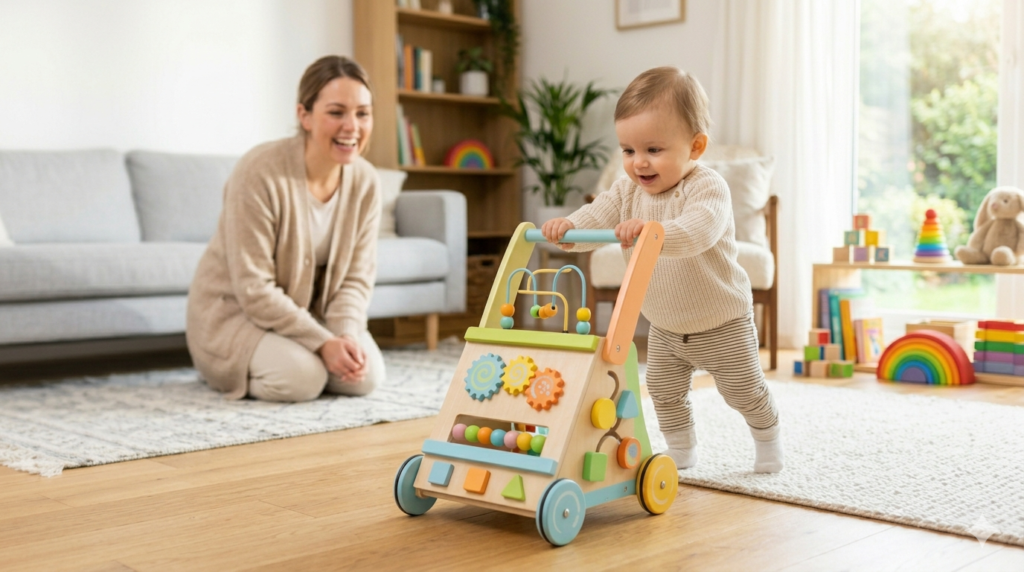
A learning walker for baby toy is an interactive developmental toy designed to help babies learn how to stand, balance, and walk while engaging in fun educational activities.
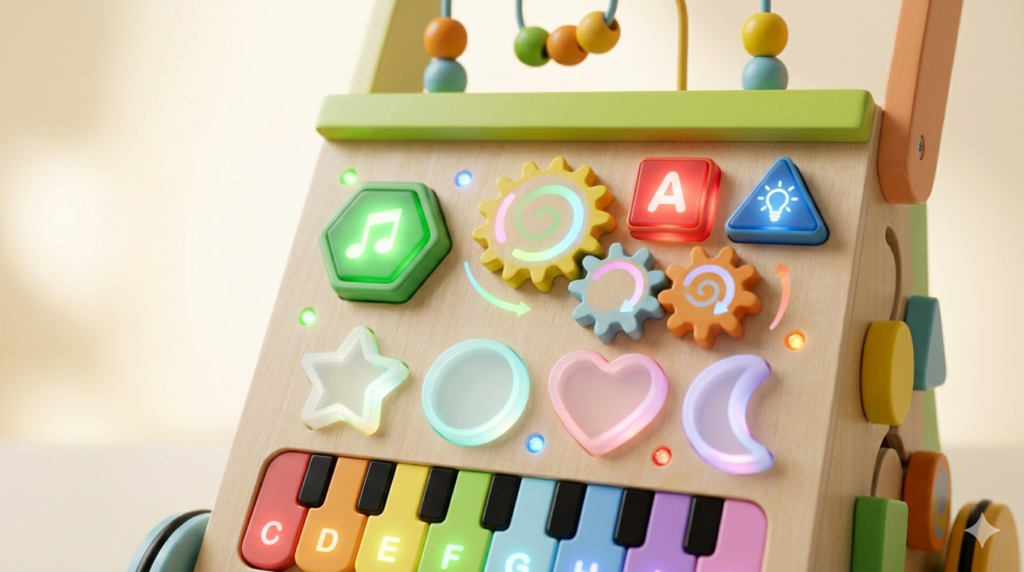
Unlike older-style walkers, today’s models are smarter, safer, and more engaging. They often include:
- Activity panels with buttons and lights
- Music and sound features
- Shape sorters and spinning gears
- Sensory toys for touch and coordination
- Educational elements like numbers and letters
Types of Baby Walkers
Understanding the types of walkers helps you make a safer choice.
1. Push Walkers (Recommended)
Push walkers are the most popular and safest type. Babies stand behind them and push forward while learning balance.
Why parents love them:
- Encourage natural walking posture
- Improve balance and coordination
- Reduce risk of accidents
2. Sit-in Walkers (Use with caution)
Babies sit inside a frame and move using their feet.
Concerns:
- Can lead to poor posture
- May delay walking development
- Higher risk of accidents
Benefits of Learning Walker for Baby Toy
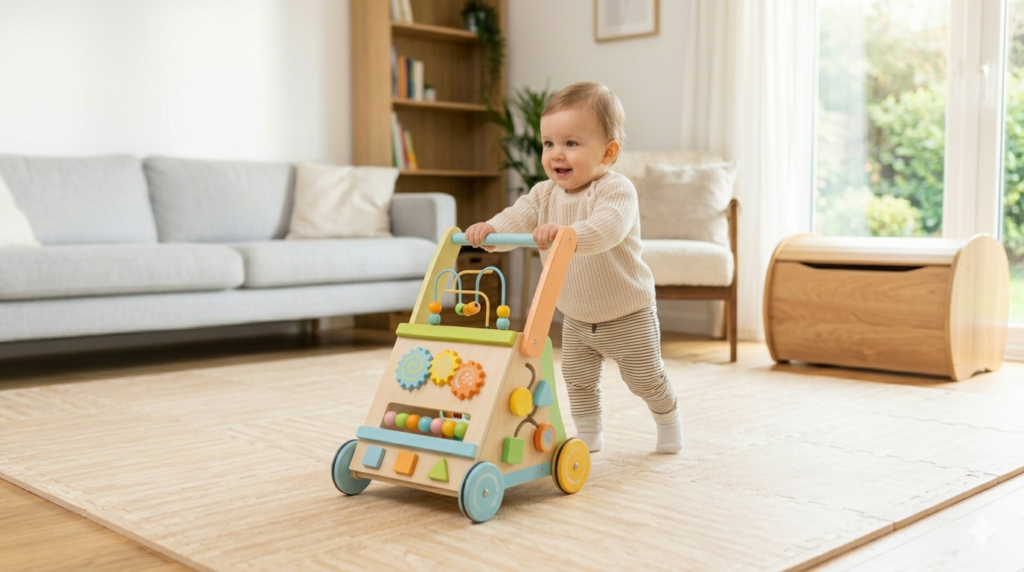
A learning walker is more than just a walking aid—it’s a complete developmental tool.
1. Builds Confidence in Walking
Babies often feel unsure when learning to walk. A walker provides support, making them feel safe while practicing steps.
2. Strengthens Muscles
Using a walker helps develop:
- Leg muscles
- Core strength
- Balance control
3. Improves Motor Skills
Interactive features like buttons and toys enhance:
- Fine motor skills
- Hand-eye coordination
4. Enhances Cognitive Development
Learning walkers introduce:
- Colors
- Numbers
- Sounds
These stimulate brain development and curiosity.
5. Encourages Independence
Babies love exploring. A walker allows them to move freely and discover their surroundings.
6. Keeps Baby Entertained
Music, lights, and activities keep babies busy—giving parents a little break while ensuring learning continues.
When Should You Start Using a Learning Walker?
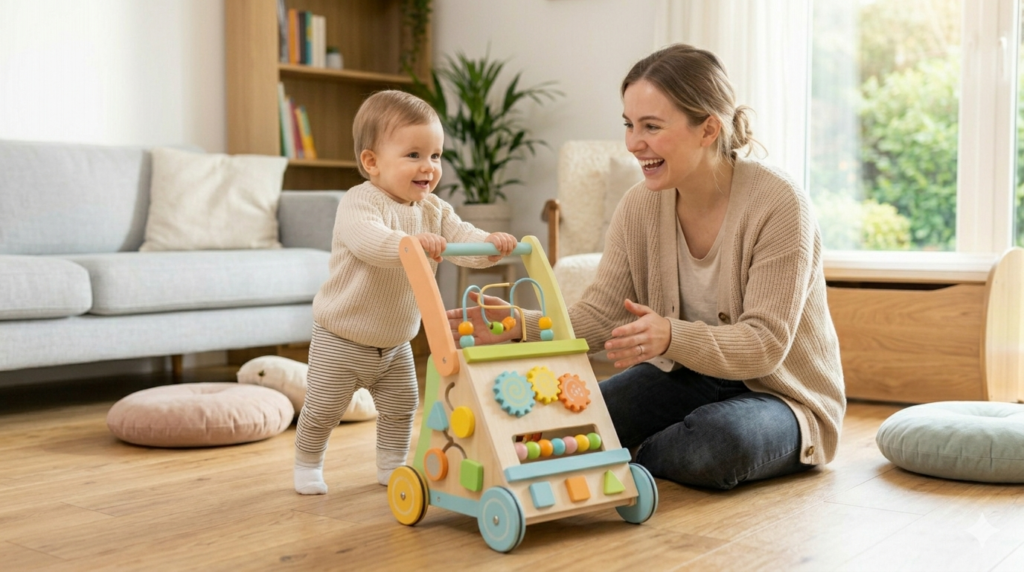
Timing is important.
Ideal Age Range:
6 to 10 months
Signs Your Baby Is Ready:
- Sits without support
- Tries to stand
- Shows curiosity to move
- Has strong neck control
Never rush your baby—development varies for every child.
Are Learning Walkers Safe?
This is one of the most asked questions—and rightly so.
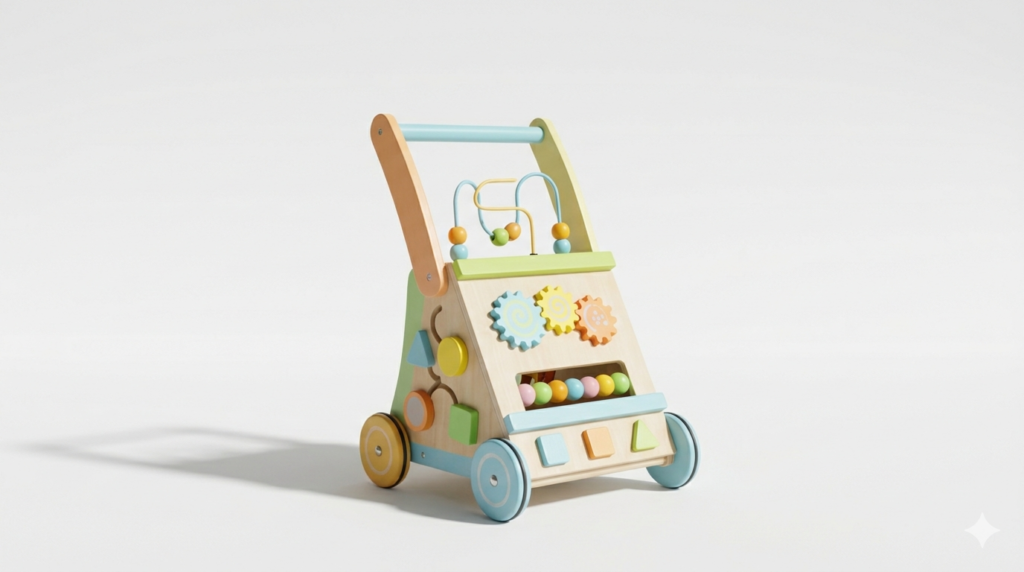
The Truth:
Push walkers are generally safe when used correctly.
Safety Tips Every Parent Must Follow:
- Always supervise your baby
- Use only on flat surfaces
- Keep away from stairs
- Choose a walker with wide base
- Look for speed control wheels
- Avoid prolonged use
How to Choose the Best Learning Walker for Baby
Choosing the right walker can make a big difference.
1. Stability Matters Most
A wide base prevents tipping and improves safety.
2. Adjustable Speed Control
This helps beginners walk slowly and confidently.
3. Interactive Learning Features
Choose walkers with:
- Lights
- Music
- Educational toys
4. Comfortable Grip Handle
Easy-to-hold handles help babies push confidently.
5. Non-Slip Wheels
Prevents sudden fast movement.
6. Durable & Safe Materials
Always choose non-toxic, BPA-free plastic.
Key Features to Look For
Modern learning walkers come with advanced features:
- Removable activity panel
- Sound and music system
- Shape sorting games
- Alphabet learning buttons
- Adjustable height
- Foldable design
Learning Walker vs Traditional Walker
| Feature | Learning Walker | Traditional Walker |
|---|---|---|
| Safety | High | Low |
| Development | Natural | May delay |
| Interaction | High | Low |
| Mobility Control | Yes | No |
Final Verdict: Learning walkers are the better and safer option.
Common Mistakes Parents Should Avoid
Even good products can be misused.
Avoid These:
- Using walker too early
- Leaving baby alone
- Overusing the walker
- Using on uneven surfaces
- Ignoring safety features
How Long Should a Baby Use a Walker?
Experts recommend:
- 15–20 minutes per session
- Maximum 2–3 times daily
Balance walker time with free crawling and walking.
Best Activities with a Learning Walker
Make it fun and educational:
- Place toys ahead to encourage movement
- Call your baby to walk toward you
- Play music interaction games
- Use colorful objects for stimulation
Cleaning and Maintenance Guide
Hygiene is crucial for babies.
Tips:
- Clean regularly with mild soap
- Wipe after every use
- Check for loose parts
- Store properly
Signs Your Baby No Longer Needs a Walker
- Walking independently
- Running or climbing
- Losing interest
At this stage, encourage free walking.
Expert Tips for Parents
- Combine walker use with floor play
- Encourage barefoot walking indoors
- Praise every small step
- Avoid comparing your baby with others
Frequently Asked Questions (FAQs)
Do learning walkers really help?
Yes, especially push walkers support walking practice.
Are they necessary?
No, but they can be helpful tools.
Can walkers delay walking?
Push walkers don’t—traditional ones might.
What is the safest option?
Push-style learning walkers.
Final Thoughts
A learning walker for baby toy can be a wonderful addition to your baby’s development journey. When chosen carefully and used correctly, it offers the perfect balance of learning, movement, and fun.
However, always remember:
Your presence, encouragement, and love are the most important factors in your baby’s growth.
Every step your baby takes—whether supported or independent—is a beautiful milestone worth celebrating.


